
Ever uploaded a YouTube video only to watch viewers drop off within seconds? You’re not alone. Human attention spans are shockingly short: around 8.25 seconds on average. That means you have mere moments to captivate your audience before they click away. The solution? A powerful hook at the very start of your video.
Grabbing attention immediately is no longer optional but essential. Studies show the first 15 seconds of your video are crucial for retaining viewers. On ultra-competitive platforms like Shorts, it’s often the first 3 seconds that decide whether someone watches or scrolls. A strong hook not only keeps eyes on your content longer, it also boosts watch time and signals to YouTube’s algorithm that your video is worth promoting. If you can’t hook viewers immediately, your content may never get the chance to shine.
The good news is you don’t have to reinvent the wheel. There are proven templates for YouTube video hooks that anyone can use. In this guide, we’ll break down 9 of the best hook templates to boost engagement on your YouTube videos.
📋 TL;DR YouTube Video Hooks
- The first few seconds are critical. A snappy intro can make or break your viewer retention.
- Use proven hook frameworks to spark curiosity and promise value. These tap into psychology to grab attention fast.
- Strong hooks boost watch time and SEO. Hooking viewers early leads to higher engagement and watch duration, which tells the YouTube algorithm your video is valuable.
- Keep hooks concise and honest. Deliver on your hook’s promise. Great hooks aren’t clickbait; they intrigue without misleading.
1. Mistake Call-Out Hook
➡️ Turn a Common Mistake into a Must-See Moment
This hook grabs viewers by telling them they’re doing something wrong, and hinting you’ll show them how to do it right. By boldly calling out a common mistake or misconception in your niche, you spark an instant reaction: “Uh oh, am I doing that?” The viewer’s pride and curiosity compel them to keep watching to learn the correct approach.
Mistake Call-Out Key Features
- Challenges assumptions: Confronts a widespread practice or belief and claims it’s mistaken, immediately getting the viewer’s attention.
- Urgency to improve: Creates a need to know in the viewer. Nobody wants to be in wrong 99%, so they feel urgency to learn the right way.
- Sets up corrective advice: Frames the video as a solution or tutorial that will fix the error, encouraging viewers to stay for the payoff.
For example, a fitness channel might start with “Stop Doing This Stretch. You’re Hurting Your Back” in big on-screen text. A tech reviewer could say, “Don’t buy that new gadget… not before you hear this”, flipping the viewer’s expectation. This “You’ve been doing it wrong” approach works because it challenges the viewer’s assumptions and promises immediate value. People feel they must watch to avoid missing out on the “right” way. It taps into a bit of fear and FOMO: no one likes making mistakes, especially when a simple video could save them from it!
Once you’ve hooked them, deliver on the promise. Explain the mistake in detail and show the correct method or alternative. Be constructive and encouraging, the goal isn’t to shame the viewer but to educate. By the end, the audience should feel relieved that they learned something new and motivated to apply it. Looking ahead, mistake call-out hooks will continue to thrive because there’s always new misinformation or bad habits cropping up. As trends change, savvy creators will be there to point out “what everyone’s doing wrong” and offer a better way.
2. Pain Point Hook
➡️ Speak to the Struggle Your Viewer Faces
This hook zeros in on your audience’s biggest pain point or problem, and immediately promises relief. By opening with the very issue that keeps your viewer up at night (“Struggling with X?”), you demonstrate empathy and relevance. The viewer feels “Yes! I have that problem!” and is instantly invested to see your solution.
Pain Point Key Features
- Instant relatability: Opens with a scenario or question that mirrors the viewer’s own struggle (e.g. “Tired of [painful problem]?”). This shows you understand their challenge.
- Solution-oriented: Implies that answers are coming often using phrases like “Here’s how to fix it” or “Try this”. The viewer anticipates relief is on the way.
- Emotional connection: Addresses a frustration or fear directly, building trust. The tone is often caring or encouraging, positioning you as a guide who’s here to help.
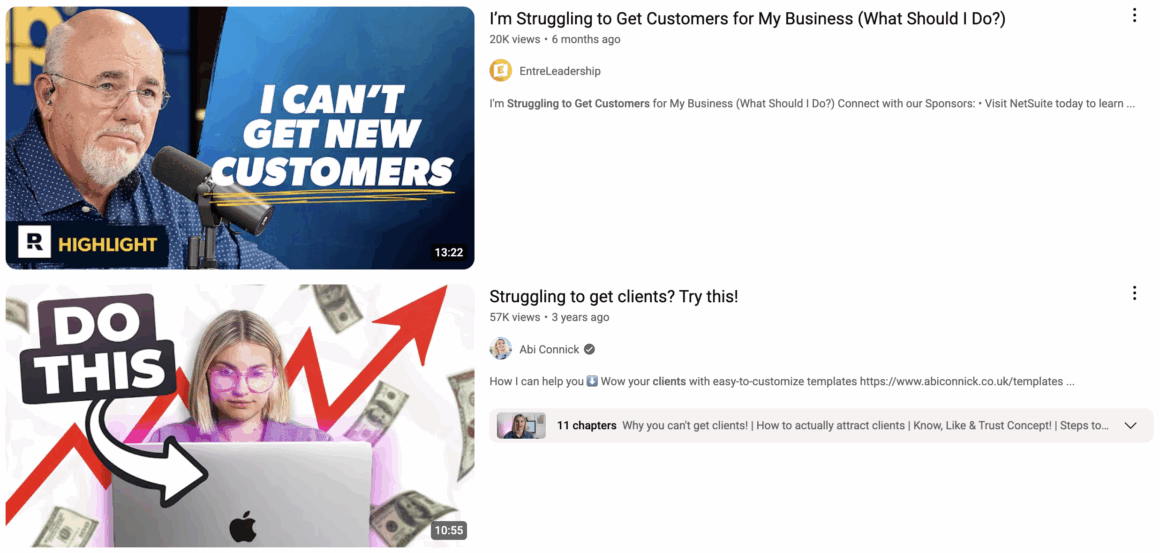
Imagine a small business marketing video that begins: “Struggling to get customers to notice your posts?” Immediately, business owners facing that problem will nod and watch on. Or a cooking channel might ask, “Burning your pancakes every time? Let’s fix that.” By acknowledging the pain first, you hook viewers with empathy. In marketing terms, you’re agitating the problem just enough to reaffirm why it matters, then quickly moving to the solution so they don’t click away.
After the hook, deliver actionable value. Show step-by-step how to solve the issue or share tips that address the pain point. This hook works best if you genuinely solve the problem in your content: quick fixes, hacks, or comprehensive how-tos shine here. Viewers stick around because they feel understood, and they’ll leave satisfied (and likely grateful) that you helped them overcome a hurdle.
Going forward, pain point hooks will remain powerful because people will always seek solutions to their troubles. As more content creators compete for attention, those who deeply understand their audience’s pains, and lead with that understanding, will win loyalty. It’s a timeless formula: show people you get their problem, then show them you can fix it.
3. Surprising Fact Hook
➡️ Shock Them with a Jaw-Dropping Stat or Truth
Nothing grabs attention like a “Wait, really?!” moment. This hook template leads with a surprising fact, statistic, or revelation that blows the viewer’s mind or flips their understanding of a topic. By starting your video with a crazy number or an unexpected truth, you spark instant curiosity. The viewer is hooked, wanting to hear the story or explanation behind the shocker.
Surprising Fact Key Features
- High shock value: Presents a fact or claim that is unusual, counter-intuitive, or amazing (e.g. “This simple habit increases memory by 80%”). The novelty of the info piques interest.
- Credibility cues: Often backed by a quick reference to a source or visual proof (to make it believable). The tone might be “Did you know…?” which positions you as a knowledgeable source.
- Opens a curiosity loop: The fact alone isn’t the full story, it teases a larger explanation. Viewers stick around to learn why or how that surprising fact is true.
For instance, a science video could kick off with, “Did you know humans actually have more than five senses?” Or a business vlog might state, “Last year, a single typo cost a company $1.2 million”, and then promise to explain what happened. These kinds of intros jolt the viewer’s brain. When we encounter a surprising piece of information, we become invested in understanding the context or details.
After dropping the bombshell fact, your job is to satisfy the viewer’s curiosity. Dive into the story, research, or explanation behind the stat. Make sure the rest of the video lives up to the hook and provide accurate details and meaningful insight. Done right, the audience ends up both entertained and educated, and they’ll remember your video (people tend to recall surprising info more easily).
In the future, as information becomes even more abundant, surprising fact hooks will cut through the noise by offering the one thing everyone craves: something they didn’t know. Just be sure your fact is relevant to your content and not just clickbait. A truly intriguing fact that ties into your video’s topic will not only hook viewers but also establish your content as enriching.
4. Question Hook
➡️ Ask and You Shall Retain (Your Audience)
Sometimes the best way to pull someone in is to ask a question they need to know the answer to. A question hook opens your video by posing a direct, thought-provoking question to the viewer. This technique immediately engages the audience’s mind and they’ll instinctively think about their own answer, and stick around to hear yours.
Question Key Features
- Direct engagement: Often uses “you” to address the viewer (e.g. “Have you ever wondered why…?”). It feels like a personal conversation, hooking viewers by involving them.
- Curiosity trigger: The question usually centers on an intriguing topic or a common doubt. It creates a curiosity gap and the viewer wants to know the answer or outcome.
- Implied value: By asking the question, you imply that the video will provide an answer or insight. This sets an expectation that keeps viewers watching for the resolution.
For example, a travel vlogger might begin with, “What would you do if you got stranded in a foreign country with no money?” Immediately, you’re imagining yourself in that scenario. Or a tech tutorial could start, “Which is better for your needs: a laptop or a tablet?” If that’s a question on the viewer’s mind, they’re hooked. Questions naturally engage viewers by prompting them to think about their own answers, which can lead to higher retention rates. In essence, the audience subconsciously enters a dialogue with your video, they want to see if the video’s answer matches or enlightens their own thoughts.
When using a question hook, make sure to follow through. Don’t leave the question hanging too long, acknowledge it and dive into exploring the answer. You can even use the question as a structuring device (“In this video, we’ll answer that by looking at X, Y, Z…”). This confirms to the viewer that they’re in the right place for answers. Also, choose questions that are relevant and interesting to your target audience. The best questions either tap into widespread curiosity or niche-specific debates that your viewers care about.
Looking ahead, question-based hooks align perfectly with an interactive, community-driven era of content. As viewers crave more connection and conversation, asking them a great question at the start is a fantastic way to grab attention. You might even see creators using polls or on-screen prompts for viewers to consider their answer (or leave it in comments). The key is keeping it genuine. Pose a question you’re truly prepared to explore or answer in the video.
5. Urgent Warning Hook
➡️ Stop! Pay Attention or You’ll Regret It
This hook leverages our natural aversion to danger or missing out. An urgent warning hook starts with a strong caution, ultimatum, or time-sensitive alert that effectively says: “Do this (or don’t do that) or else you’ll face consequences.” It creates a sense of urgency and FOMO (fear of missing out) that makes viewers feel they must keep watching to avoid a loss or mistake.
Urgent Warning Key Features
- FOMO and fear: Uses language that implies a risk or a limited-time opportunity (“Don’t miss this,” “Before you do X, watch this”). This taps into the fear of missing out or messing up.
- Authoritative tone: Often delivered as a command or stern advice (think “Stop immediately…” or “Never do ____”). It grabs attention by sounding important and non-negotiable.
- Value proposition through warning: The flip side of the warning is usually a benefit. If you heed the advice in the video, you’ll avoid disaster or gain something valuable. This contrast hooks the viewer: danger if you leave, safety/profit if you stay.
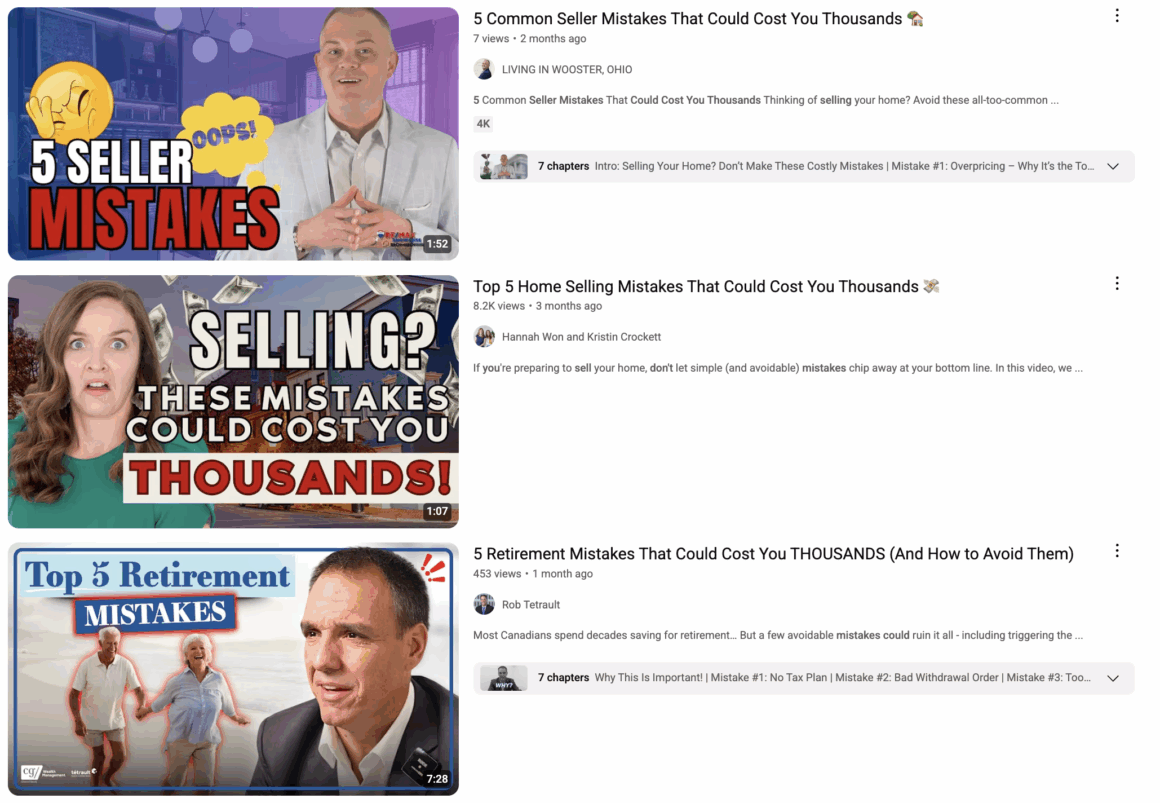
Consider an example from personal finance: “⚠️ 3 Retirement Mistakes That Could Cost You Thousands: Don’t Do #2!” The viewer instantly worries, Am I making these mistakes? I’d better find out. Or a cybersecurity video might begin, “Stop using public Wi-Fi for banking before it’s too late.” Yikes! This kind of intro plays on a bit of fear to seize attention. It’s like a flashing red light you have to look. Importantly, humans are wired to avoid loss more than seek gains, a psychology principle known as loss aversion. By creating urgency or the fear of missing out, these hooks compel viewers to act (or in this case, to watch) immediately.
When using an urgent warning hook, integrity is key. Make sure the warning is valid and not exaggerated clickbait. If you claim “last chance” or “do this or else,” your content should substantiate that claim with real reasons. Provide evidence or logical arguments for the warning. For instance, explain why a certain action is dangerous or how an opportunity is limited. This keeps viewers engaged and maintains your credibility. As you deliver the content, move from the urgent tone of the intro into a helpful advisory tone and reassure viewers that by continuing to watch. They’ll learn how to stay safe or take advantage of the situation.
In the future, expect urgent-style hooks to remain prevalent, especially in how-to, finance, health, and tech niches where stakes can be high. People will always respond to time-sensitive alerts (think of how live streams use “Breaking News” banners). However, audiences are also becoming savvier about clickbait, so successful creators will use this technique sparingly and truthfully. A well-placed legitimate warning will outperform a dozen hollow scare tactics.
6. Secret/Reveal Hook
➡️ “Psst… Want to Know a Secret?”
Everybody loves feeling like they’re getting insider information. The secret/reveal hook entices viewers by hinting at a hidden truth or little-known insight that will be unveiled in the video. By using phrases like “No one talks about this…” or “The secret to…”, you create intrigue and make the viewer feel special as if they’re about to learn something exclusive that most people don’t know.
Secret/Reveal Key Features:
- Exclusivity: Implies the information is insider or rarely shared (“What they don’t tell you about…”). This taps into viewers’ curiosity to be in-the-know.
- Builds suspense: Often you won’t fully state the secret upfront, you’ll allude to it and then reveal it during the video. The intro sets up a mystery that needs solving.
- Personal/confessional tone: Can be framed as a confession or insider tip (e.g. “I probably shouldn’t say this, but…”). This tone grabs attention because it feels like forbidden or privileged info.
A classic example: a streaming community guru might open with “No one talks about this in Facebook Ads… but it’s a game-changer.” If you’re interested in Facebook Ads, you’re hooked and you want that edge over others. Or a travel blogger could tease, “I’m going to share the one secret my airline pilot friend told me about getting free upgrades.” That sounds exciting and exclusive! This hook works by tapping into exclusivity and a behind-the-scenes vibe. Viewers feel like insiders when they watch. People have a natural urge to uncover secrets and be part of a special group with knowledge.
When you use a secret/reveal hook, be sure to deliver a satisfying payoff. Few things will disappoint viewers more than a promised “secret” that turns out to be trivial or a sales pitch. If you say “secret,” it better feel like a valuable nugget of information or a fresh perspective when you reveal it. Structure your video so that the “secret” is revealed at the right moment (not too early, not too late) and then fully explain it. Support it with examples or evidence to make the audience feel, “Wow, I’m glad I learned this.”
Looking forward, secret-style hooks continue to thrive because who doesn’t want an edge or a peek behind the curtain? In a world of abundant information, framing something as hidden or under-discussed makes it instantly enticing. As long as you handle it truthfully, revealing a “secret” can position you as an authority (you have knowledge others don’t) and build a loyal following that trusts you for insider tips.
7. Challenge/Experiment Hook
➡️ “I Did What?! Here’s What Happened…”
One surefire way to grab attention is to take on a bold challenge or experiment and use that as your hook. This template involves briefly setting up an unusual or ambitious task you attempted, especially one with a time frame or extreme condition (30 days of X, 24-hour challenge, etc.), and hinting at the outcome. It’s inherently story-driven: viewers get hooked because they want to see the journey and the result of your challenge.
Challenge/Experiment Key Features
- Storytelling element: Introduces a narrative right at the start: you (or someone) did something noteworthy or crazy, and there’s a story to tell about it. It humanizes the hook.
- Curiosity about outcome: If you say “I did X for 30 days,” the viewer immediately wonders, how did it go? what happened? This encourages viewers to watch how the situation unfolds.
- Often extreme or novel: The challenge should be interesting or relatable. It could be extreme (like a stunt or endurance test) or a trendy experiment (quitting sugar for a month, trying 10 side hustles, etc.). The novelty or difficulty level is what draws attention.
Think of popular YouTubers: MrBeast is famous for wild challenge hooks (“I spent 50 hours buried alive”). For a more everyday example, a productivity vlogger might start with, “I woke up at 5 AM every day for a month. Here’s what I learned.” The introduction sets the stage: you took on a challenge, and the viewer needs to stick around to see the payoff. This hook works brilliantly because it’s like a mini reality show teased in one line. Humans are naturally drawn to stories and challenges. We have to see if the person succeeded, failed, or how they changed in the process.
When deploying a challenge/experiment hook, make the scenario clear and engaging in the first sentence or two. Use captions or visuals if possible to illustrate the challenge (e.g. a quick montage of day 1 vs day 30). Throughout the video, keep the storytelling tight: take the viewer through the experience, but don’t take too long to get to interesting milestones or the result. Remember, the hook promises an outcome (“here’s what happened” or “here’s what I learned”), so deliver that insight or transformation clearly by the end.
This format is likely to remain popular well into the future, especially with the rise of vlog-style content and authenticity in social media. As audiences, we love following along with someone’s journey because it’s engaging and often inspiring. Challenge hooks also encourage community interaction (viewers might suggest challenges or attempt them along with you). In short, as long as people love stories, they’ll love a good challenge-based hook.
8. Pattern Interrupt Hook
➡️ Disrupt Expectations with a Visual Surprise
Sometimes the best way to seize attention is to completely break the viewer’s expectations at the start of your video. The pattern interrupt hook is all about using an unexpected element (an odd visual, a sudden sound, a jarring edit) in the first moments, effectively “slapping” the viewer’s brain awake. By doing something totally unpredictable, you captivate the audience out of sheer surprise.
Pattern Interrupt Key Features
- Immediate shock or novelty: Begins with a scene or clip that seems out of context or startling (e.g. a loud alarm blaring, an explosion effect, or a random funny meme appearing). This unexpected stimulus triggers heightened attention.
- Breaks the fourth wall: Often it can be something like the creator doing something zany or a quick camera trick. It breaks the usual pattern of “hi, welcome to my video,” which jolt viewers out of complacency.
- Quick transition to content: After the interrupt, the video usually pivots into the actual topic (sometimes acknowledging the randomness humorously). The contrast makes the real topic even more engaging because the viewer’s senses are on alert.
For example, imagine a cooking tutorial that starts with 2 seconds of the chef wearing a dinosaur costume bursting through a door, then cuts to, “Alright, now that I have your attention, let’s talk about baking perfect cupcakes.” It’s silly, but it works: you weren’t expecting that, so you keep watching. Or consider a serious topic video that opens with a brief fake “error message” on screen or a few seconds of unrelated chaotic footage, then the host appears and says “Now that I’ve interrupted your scrolling pattern, let’s get to the real story.” These tactics exemplify pattern interrupt: introducing an element that doesn’t fit the usual pattern, thereby forcing the viewer’s brain to pay full attention to reconcile what’s happening.
Pattern interrupts exploit our brain’s instinct to seek understanding when something doesn’t match our predictions. By presenting something incongruous, you create an almost irresistible need to see what comes next to make sense of the situation. The key is that the interrupt should be relevant or appropriate for your audience and content tone. A random jump scare might not suit a gentle crafting channel, for instance. But done right, it not only hooks viewers, it also makes your video more memorable.
When using this hook, keep the interrupt segment very short (a few seconds at most) and ensure it ties into your video in some clever way. Maybe it’s a thematic joke or a metaphor. Always follow up by clearly introducing your actual topic, so viewers aren’t left confused for too long. The pattern break is the hook, but your content still needs to reel them in after that initial shock.
Looking forward, as audiences get inundated with similar-looking content, pattern interrupts may become even more common to stand out. From TikTok to YouTube, creators who master this can significantly increase retention. Just be mindful: overusing wild interruptions can be jarring or off-putting. The trend will likely be quality over quantity with pattern interrupts: a single brilliant twist at the beginning rather than chaos throughout.
9. Outcome Teaser Hook
➡️ Lead with Success: “Here’s What We Achieved”
Why not start at the end, with an impressive result, and work backwards? The outcome teaser hook does exactly that: it opens your video by revealing a powerful result or benefit, enticing viewers to find out how you got there. By front-loading the payoff (the “after” in a before-and-after scenario), you immediately give viewers a reason to care and continue watching for the backstory or method.
Outcome Teaser Key Features
- Shows a highlight or result upfront: Whether it’s a final product, a transformation, or a big number achieved, the hook shines a spotlight on it from the get-go (e.g. “This ad campaign got us 1,000 signups in a day with $0 spent”).
- Promises the “how-to”: Implies that the video will explain how that result was accomplished, which is the value proposition for the viewer (they want that result too, or are at least curious).
- Aspirational and concrete: Viewers are drawn to success stories and tangible outcomes. This hook provides social proof or credibility by demonstrating you’ve done something noteworthy, and invites viewers to learn from it.
For example, a fitness trainer’s video might begin with “🥇 I lost 50 pounds in 6 months. Here’s how I did it.” Instantly, anyone interested in weight loss is hooked, the result is right there so the content must be valuable, right? Or a DIY home improvement video could start, “See this dated kitchen? We renovated it into this modern space for under $5k.” Flash the before-and-after images in the first seconds and you’ve got the audience’s attention. People love transformations and case studies because they immediately show what’s possible and promise a story or lessons behind it. In fact, showing a dramatic “after” image or stat at the start is both surprising and satisfying, This is visually pleasing and signals that the video has concrete, useful content.
When using an outcome teaser hook, make sure your video indeed details the process or tips that led to that outcome. Essentially, the structure becomes: “We achieved X. Now we’ll show you how you can achieve X (or how we did).” This hook works especially well for tutorials, case studies, and testimonial-style content. It can also be great for listicles (“Top 5 tools that got us to #1 on Google. We’ll show you each”) by teasing the success metric first. One note: be truthful and realistic with outcomes. If results may vary, clarify that; you want to inspire, not mislead.
Trend-wise, this hook taps into our results-oriented culture. As attention spans shrink, viewers often want to know why a video is worth their time, leading with the outcome answers that immediately. We’re likely to see more educators and marketers use this approach, essentially giving away the climax first to ensure people stick around for the journey.
Elevate Your Hooks with Expert Help
Crafting powerful YouTube video hooks isn’t always easy, but you don’t have to do it alone. Many creators struggle with finding the right words, visuals, or timing to keep audiences hooked which is why working with professionals can make a huge difference. Fiverr freelancers, from scriptwriters to video editors, can help you refine your intro lines, polish your delivery, and add visual flair that grabs attention instantly.
Whether you need research-backed facts, emotional storytelling, or dynamic editing, there’s a Fiverr expert who specializes in exactly that. By collaborating with pros, you ensure your hook doesn’t just sound good on paper but actually performs in real-world videos. The result? A polished, scroll-stopping intro that elevates your entire video and keeps viewers watching to the very end.
Mastering YouTube Video Hooks for Lasting Engagement 🎬
YouTube is a battlefield for attention, and strong hooks are your best weapon. Whether you call out mistakes, ask a bold question, or tease a surprising result, each template is designed to grab viewers in those crucial opening seconds. When you master these techniques, your content immediately stands out and encourages people to stick around.
The key is alignment: always deliver on the promise your hook makes. If you open with a shocking fact, back it up with proof; if you lead with a challenge, share the journey and the results. This honesty builds trust, turning first-time viewers into long-term subscribers. Finally, remember that execution matters just as much as the idea. A poorly delivered hook can fall flat, while a polished intro elevates your entire video.
YouTube Video Hooks FAQ
Q: What is a YouTube video hook, and why is it so important?
A: A YouTube video hook is the opening few seconds of your video designed to grab viewers’ attention and entice them to keep watching. It can be a catchy line, question, surprising visual or anything that stops people from clicking away. Hooks are crucial because YouTube’s algorithm and audience behavior favor videos with high retention. If you hook viewers early, they’ll watch longer, boosting your engagement and visibility on the platform.
Q: How long should a YouTube video hook be?
A: Keep hooks short and sweet. Aim to capture attention within the first 5–15 seconds of your video. In fact, for shorter content like YouTube Shorts, the hook might happen in under 3 seconds. In longer videos, you might take a few more seconds to set the scene, but generally the sooner the better becasue viewers often decide within moments whether to stay or leave. The key is to front-load something compelling (a statement, visual, or question) right at the start. Also, ensure your hook transitions smoothly into your main content by around the 15-second mark so viewers know what to expect next.
Q: What are “YouTube intro templates” or hook templates, and how do I use them?
A: YouTube intro templates (or hook templates) are basically formulaic approaches to starting your video. Instead of winging the intro, you use a proven framework (like a question, a surprising fact, a mini-story, etc.) to engage viewers. For example, the “surprising fact hook” template means you’d begin with an interesting statistic or fact to spark curiosity. These templates serve as a starting point or recipe: you fill in the specifics based on your topic. Using hook templates can save you time and ensure your intro is structured for impact. You can mix and match templates with your own creative twist so your intros stay fresh and aligned with your personal style.